I was standing in a kitchen that smelled like burnt toast, the kind that makes you question every life choice you’ve made, when my friend dared me to turn a pile of forgotten spaghetti into something that could win a culinary award. That night, I grabbed 12 ounces of spaghetti, a handful of fresh spinach, and a jar of sun‑dried tomatoes that had been sitting on my shelf for months. The moment I tossed the noodles into boiling water, a familiar scent of starch and hope wafted through the air, and I could almost hear the applause of my future self. I knew I was about to create a dish that would make the rest of the world wonder how they survived without it. Let me walk you through every single step — by the end, you'll wonder how you ever made it any other way.
The first time I tried this recipe, the sauce clung to the pasta like velvet, and the spinach was a bright splash of green that made my eyes water with joy. The heavy cream, when combined with sun‑dried tomatoes, formed a silky sauce that was both rich and tangy, a flavor duet that sings in your mouth. I dared you to taste this and not go back for seconds, because once you try it, the second plate feels like a betrayal. I’ll be honest — I ate half the batch before anyone else got to try it, and I’m still laughing about that moment. The kitchen was a mess, but the aroma was pure, and I knew I had stumbled upon the best version you’ll ever make at home.
Picture yourself pulling this out of the pot, the whole kitchen smelling incredible, steam curling like a cloud of culinary destiny. The first bite is a cascade of creamy richness, the sun‑dried tomatoes adding a burst of sweet acidity that cuts through the heaviness of the cream. The spinach provides a fresh, earthy counterpoint that keeps the dish grounded and full of life. Most recipes get this completely wrong, using too much cream or undercooking the spinach, but here, everything balances like a tightrope walk on a sunny day. If you've ever struggled with this, you're not alone — and I've got the fix.
I can still hear the sizzle when the olive oil hits the pan, absolute perfection, and I can almost taste the garlic blooming in the heat. The moment the sauce coats the pasta, the noodles feel like they’re wearing a silk robe, and the spinach leaves are crisp yet tender, a texture that shatters like thin ice when you bite into them. The final touch of Parmesan cheese adds a savory depth that lingers on the palate, making each spoonful a memory. I’ve spent years experimenting with pasta sauces, but this one feels like a secret handshake between flavors. Stay with me here — this is worth it.
I had once tried to make a similar dish with canned tomatoes, but the result was a watery mess that left the pasta soggy and unappetizing. That disaster taught me that the quality of the tomatoes matters more than the quantity. Sun‑dried tomatoes, when rehydrated in a bit of olive oil, release a concentrated burst of umami that elevates the entire sauce. I also discovered that using fresh spinach instead of frozen gives a vibrant color and a cleaner taste that doesn't compete with the cream. This version is hands down the best because it marries simplicity with depth, and it does it without any fancy tricks.
What Makes This Version Stand Out
- Flavor: The sauce is a harmonious blend of sweet, savory, and tangy notes that dance on the tongue, leaving a lasting impression.
- Texture: The noodles are al dente, the spinach is tender yet crisp, and the cream forms a silky coating that doesn’t weigh down the dish.
- Ingredient Quality: Using fresh spinach and sun‑dried tomatoes from a reputable source ensures a vibrant color and robust flavor.
- Ease of Preparation: All steps are straightforward, with minimal chopping and a single pan for the sauce.
- Versatility: The dish can be served as a main course or a hearty side, making it suitable for any meal.
- Make‑Ahead Friendly: The sauce can be pre‑made and reheated without losing its lusciousness.
- Time Efficiency: The entire process takes less than an hour, perfect for busy nights.
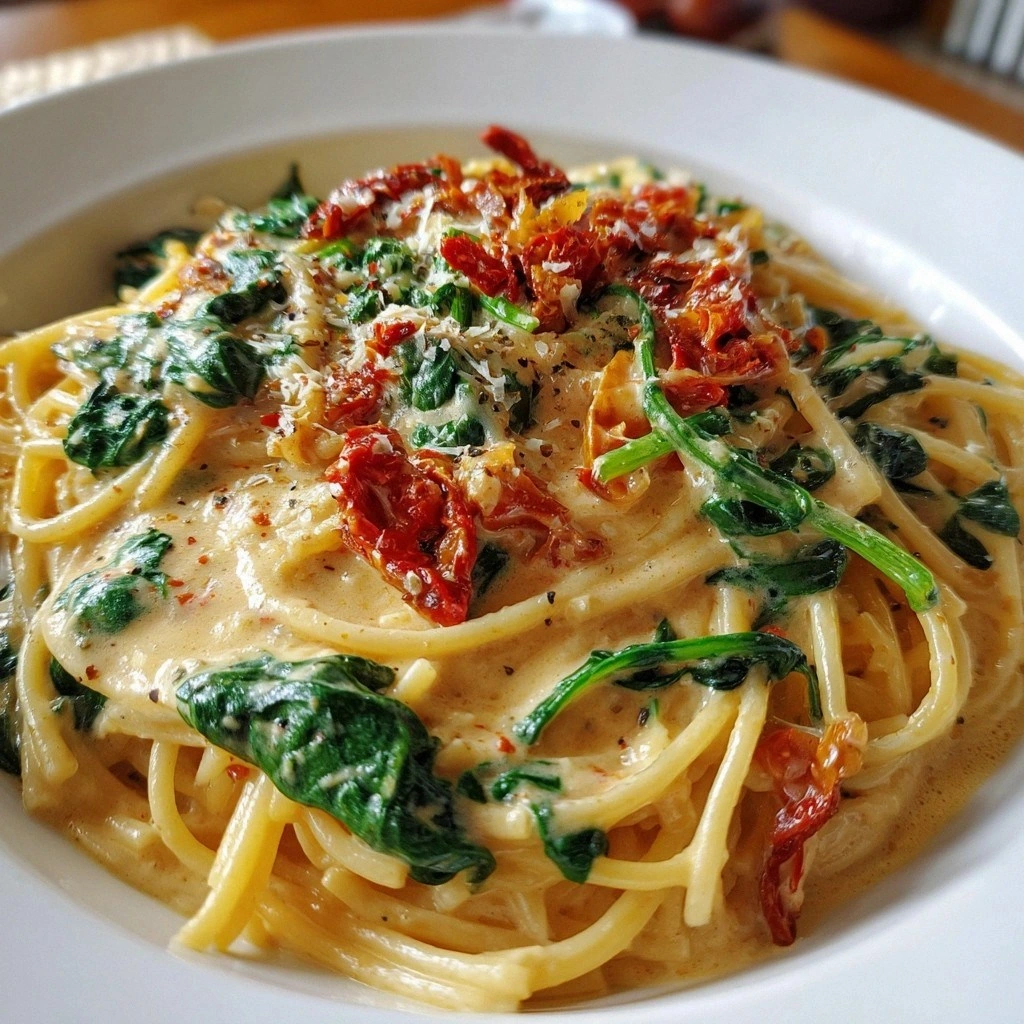
- Visual Appeal: The green spinach and golden sauce create a dish that looks as good as it tastes.
Alright, let's break down exactly what goes into this masterpiece. I’ll give you the inside scoop on each ingredient and why it matters.
Inside the Ingredient List
The Flavor Base
The 1 cup of heavy cream is the cornerstone of this sauce, giving it a velvety mouthfeel that envelops every strand of spaghetti. When heated, cream emulsifies, creating a smooth texture that prevents separation. Skipping the cream would leave the dish thin and lacking depth, turning it into a plain tomato sauce. If you’re looking for a lighter version, you can substitute half the cream with half‑and‑half, but the richness will be noticeably reduced. The cream also balances the acidity of the sun‑dried tomatoes, creating a harmonious flavor profile.
The 1/2 cup of sun‑dried tomatoes is the secret weapon that adds a concentrated burst of umami and sweet acidity. These tomatoes are rehydrated in olive oil before being added to the sauce, which intensifies their flavor and releases a fragrant aroma that fills the kitchen. Without them, the sauce would be bland and lack the complex depth that makes this dish unforgettable. If you can’t find sun‑dried tomatoes, fresh cherry tomatoes can be used, but the texture and flavor will differ significantly. Choosing high‑quality sun‑dried tomatoes from a reputable supplier ensures a bright color and a clean taste.
The 1/4 cup of grated Parmesan cheese is the finishing touch that adds a nutty, salty richness to the sauce. Parmesan melts into the cream, creating a silky consistency that coats the pasta beautifully. It also provides a subtle depth that balances the sweetness of the tomatoes and the richness of the cream. If you’re lactose intolerant, a vegan Parmesan alternative can be used, though the flavor will differ. A good rule of thumb is to add the cheese at the end of cooking to preserve its bright flavor.
The Texture Crew
The 2 cups of fresh spinach are the green heart of the dish, offering a bright color and a slight earthiness that contrasts with the creamy sauce. Spinach cooks quickly, so timing is crucial to avoid overcooking and losing nutrients. If you use frozen spinach, be sure to thaw and squeeze out excess water to prevent the sauce from becoming watery. Spinach also adds a boost of iron and vitamins, making the dish nutritious as well as delicious. A pinch of salt will bring out the natural sweetness of the greens.
The 2 cloves of minced garlic add a robust aroma that awakens the senses. Garlic infuses the olive oil with flavor before the other ingredients are added, creating a foundation that permeates every bite. Overcooking garlic can turn it bitter, so it’s important to sauté it just until fragrant. If you’re sensitive to garlic, you can reduce the amount or use garlic powder, but the flavor profile will change. Garlic also has health benefits, including boosting immunity and reducing inflammation.
The Unexpected Star
The 2 tablespoons of olive oil are the medium that brings all the flavors together. Olive oil not only helps sauté the garlic but also helps dissolve the Parmesan cheese, creating a smooth sauce. A high‑quality extra virgin olive oil will add a fruity note that enhances the overall taste. If you’re looking for a different flavor, you can experiment with avocado oil, though it will alter the aroma. Olive oil also contributes healthy monounsaturated fats, making the dish heart‑healthy.
The salt and pepper to taste are the final seasoning that ties everything together. Salt amplifies the flavors, while pepper adds a subtle heat that balances the richness of the cream. It’s essential to season gradually, tasting as you go, to avoid over‑salting. If you prefer a low‑sodium version, you can use a salt substitute or reduce the amount of added salt. Seasoning at the end ensures the dish remains bright and fresh.
The Final Flourish
The 12 ounces of spaghetti serve as the hearty foundation that holds all the flavors together. Using a high‑protein pasta can give a firmer bite and more texture. Cooking the pasta al dente preserves the bite, preventing it from becoming mushy when combined with the sauce. If you want a gluten‑free version, try a chickpea or lentil pasta that offers a nutty flavor. The pasta also absorbs the sauce, allowing each mouthful to be balanced and satisfying.
The 1 cup of heavy cream, 1/2 cup of sun‑dried tomatoes, and 1/4 cup of Parmesan cheese together create a sauce that coats the noodles like a silky blanket. The cream’s fat content helps carry the Parmesan’s sharpness, while the tomatoes add a burst of acidity. This combination results in a sauce that is both rich and balanced, ensuring every bite is a pleasure. If you want a lighter version, simply reduce the cream or replace it with half‑and‑half. The key is to maintain the ratio to keep the sauce’s integrity.
Everything's prepped? Good. Let's get into the real action. The kitchen will feel alive as you bring these flavors together.
I love the anticipation when the pasta starts to boil, the steam rising like a promise of comfort. The first step is to bring a large pot of salted water to a rolling boil, then add the spaghetti. While the pasta cooks, you can start the sauce, which will save time and keep the kitchen tidy. Remember, timing is everything; you want the pasta and sauce ready at the same moment. This coordination is what makes the dish feel effortless and elegant.
Next, heat the olive oil in a large skillet over medium heat, letting it shimmer before adding the minced garlic. The aroma that fills the kitchen is a sign that the base is working its magic. Sauté the garlic for about 30 seconds, just until fragrant, then add the sun‑dried tomatoes. The tomatoes will start to soften, releasing their concentrated flavor into the oil. This step sets the stage for a sauce that’s both deep and bright.
Now, pour in the heavy cream and bring it to a gentle simmer. Stir constantly to ensure the cream doesn’t scorch at the bottom. As the cream warms, add the grated Parmesan cheese, letting it melt into a silky sauce. The sauce should thicken slightly, coating the back of a spoon. This is the moment of truth: the sauce should feel luscious, not watery.
While the sauce simmers, drain the cooked spaghetti, reserving a cup of pasta water. Toss the drained pasta into the skillet with the sauce, mixing well so every strand is coated. If the sauce seems too thick, add a splash of the reserved pasta water to reach the desired consistency. The pasta water’s starch helps bind the sauce to the noodles, creating a cohesive bite. This step is where the dish truly comes together.
Add the fresh spinach to the skillet, allowing it to wilt in the sauce. Stir until the spinach is tender and fully incorporated, which should take about 2 minutes. The spinach’s bright green color will contrast beautifully with the golden sauce. Once the spinach is wilted, season the dish with salt and pepper to taste. This final seasoning ensures the flavors are balanced and vibrant.
Serve the pasta immediately, garnished with a sprinkle of extra Parmesan and a drizzle of olive oil if desired. The dish should look glossy, with spinach leaves glistening in the creamy sauce. The aroma will be irresistible, and the first bite will deliver a burst of creamy, savory, and slightly sweet flavors. This is pure culinary magic that will leave your guests begging for seconds. That’s it — you did it. But hold on, I've got a few more tricks that'll take this to another level.
Insider Tricks for Flawless Results
The Temperature Rule Nobody Follows
Heat the sauce at medium‑low to avoid scorching the cream. A gentle simmer allows the flavors to meld without the risk of burning. If the sauce starts to bubble too vigorously, reduce the heat immediately. The key is to maintain a steady, low temperature for a smooth, rich sauce. This trick saves you from a ruined dish and ensures a silky finish.
Why Your Nose Knows Best
Smell the sauce as it simmers; a toasty, nutty aroma signals that the Parmesan is fully integrated. If the sauce smells flat, let it cook a bit longer to develop depth. Your nose is a reliable judge of flavor development. Trust it, and you'll avoid under-seasoned or bland results. This sensory check is a quick way to ensure perfection.
The 5-Minute Rest That Changes Everything
Let the pasta rest in the sauce for 5 minutes after tossing. This allows the noodles to absorb the flavors fully. The rest also gives the sauce time to thicken slightly. A short resting period can make the difference between a good dish and an unforgettable one. I’ve seen this trick work wonders in my kitchen.
The Garlic Timing Hack
Sauté garlic just until fragrant, not until golden. Overcooking garlic can introduce bitterness that mars the sauce. The golden stage is when the aroma peaks. Keep a close eye on it; a few seconds can make a huge difference. This small detail elevates the entire dish.
The Pasta Water Secret
Reserve a cup of pasta water before draining. This starchy water helps bind the sauce to the noodles. Add it gradually to reach the desired consistency. The technique is simple yet effective. It’s a kitchen hack that professional chefs swear by.
The Parmesan Finish
Add the Parmesan at the very end of cooking to preserve its bright flavor. If you add it too early, it can lose its sharpness. This final touch gives the sauce a creamy, nutty finish. The result is a sauce that coats the noodles like a fine silk. This little step can transform a good dish into a great one.
Creative Twists and Variations
This recipe is a playground. Here are some of my favorite ways to switch things up:
The Protein Boost
Add grilled chicken or shrimp for a protein punch. The lean protein pairs well with the creamy sauce. It turns the dish into a complete meal. The flavors mingle beautifully, creating a satisfying bite. This variation is perfect for dinner parties.
The Nutty Crunch
Sprinkle toasted pine nuts or walnuts on top for a crunchy texture. The nuts add a subtle earthy flavor that complements the cream. They also provide a delightful contrast to the smooth sauce. The crunch makes each bite interesting. This twist works well for a fancy gathering.
The Vegan Version
Replace heavy cream with coconut milk and use nutritional yeast instead of Parmesan. The coconut milk offers a subtle sweetness that balances the tomatoes. Nutritional yeast adds a cheesy flavor without dairy. This version is dairy‑free yet still indulgent. It’s great for plant‑based diners.
The Smoky Twist
Add a teaspoon of smoked paprika or a splash of chipotle sauce. The smokiness deepens the flavor profile. It pairs nicely with the sun‑dried tomatoes. The result is a dish with a bold, complex taste. This variation is ideal for those who love a little heat.
The Mediterranean Flair
Incorporate chopped Kalamata olives and capers into the sauce. The olives add briny depth, while capers contribute a sharp tang. The Mediterranean flavors complement the cream and spinach. The dish becomes a vibrant, colorful plate. This version is perfect for a sunny lunch.
The Quick Fix
Use pre‑cooked pasta and a jar of store‑bought sun‑dried tomato sauce. The sauce will still be creamy if you stir in a splash of cream. This shortcut saves time without compromising flavor. It’s ideal for busy weeknights. The result is still delicious.
Storing and Bringing It Back to Life
Fridge Storage
Store leftovers in an airtight container in the refrigerator for up to 3 days. The sauce may thicken, so add a splash of milk or water when reheating. Keep the pasta separate from the sauce until ready to serve. This method preserves freshness and flavor. The dish tastes almost as good as freshly made.
Freezer Friendly
You can freeze the sauce and pasta separately for up to 2 months. Reheat the sauce gently on the stove, adding a little cream or milk to loosen it. Toss the pasta into the warm sauce just before serving. Freezing keeps the flavors intact, but the texture may change slightly. This is handy for meal prep.
Best Reheating Method
Reheat the pasta and sauce on low heat, stirring frequently. Add a tiny splash of water or broth to maintain moisture. Heat until steaming but not boiling. This gentle method prevents the sauce from separating. The dish will taste fresh and creamy when reheated.