Love this? Pin it for later! 📌
Why This Recipe Works
- One-pan wonder: Everything roasts together, which means minimal dishes and maximum flavor cross-pollination.
- Built-in sweetness: High-heat roasting concentrates natural sugars so even beet-skeptics become converts.
- Garlic confit effect: Whole cloves mellow into buttery pockets of umami that smear like spreadable gold.
- Balsamic reduction shortcut: We thicken the glaze right on the pan in the last five minutes—no extra pot.
- Meal-prep champion: Holds beautifully for five days, reheats like a dream, and plays nicely with grains or greens.
- Dirt-cheap luxury: Root vegetables cost pocket change, yet the finished platter looks farmers-market fancy.
Ingredients You'll Need
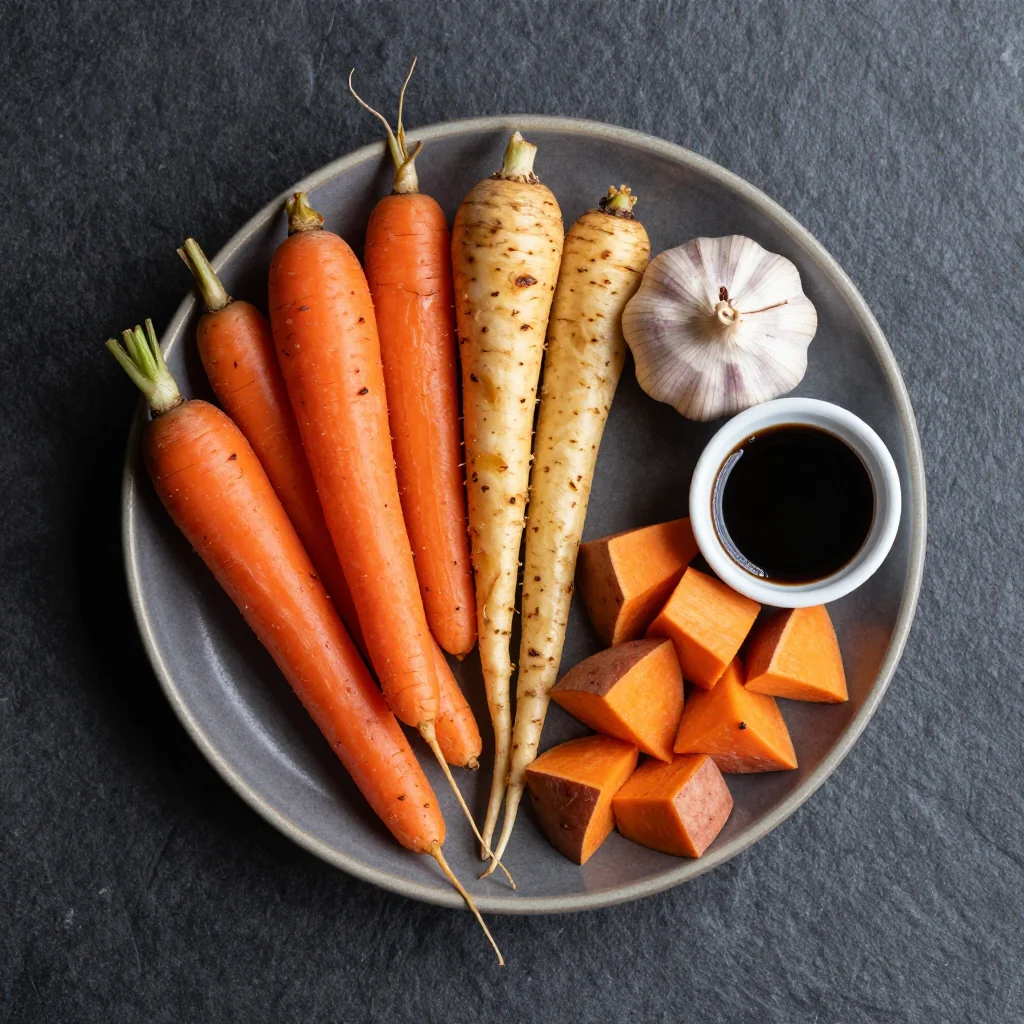
Before we talk technique, let’s talk produce. The beauty of this recipe is its flexibility—think of the ingredient list as a template rather than a straitjacket. You’ll need about three pounds of vegetables total, aiming for a rainbow spectrum so the final platter looks like stained glass.
Carrots – I grab a bunch of slender, bunched carrots instead of bagged “baby” carrots. The greens should look perky, not slimy, and the shoulders should be bright orange with no green shoulders (a sign they were over-mature). If you can only find thick supermarket carrots, split them lengthwise so every piece is roughly the same width as your parsnip coins.
Parsnips – Look for small-to-medium roots; once they grow wider than an inch, the core turns woody. Peel aggressively—the skin hides astringent tannins—and cut out any spongy centers. If parsnips aren’t your thing, swap in more carrots or sweet potato, but you’ll miss the honeyed nuance they bring.
Beets – A mix of red and golden beets makes the platter jewel-toned. Buy them loose so you can inspect for firm, unblemished skin. If you hate pink-stained fingers, slip on disposable gloves or rub lemon juice over your fingers afterward.
Turnips or Rutabaga – These brassy underdogs absorb glaze like sponges and soften into almost pear-like sweetness. If turnips taste bitter to you, soak the wedges in salted ice water for 20 minutes, then pat dry.
Red Onion – Wedges of onion practically melt, their edges frizzling into onion-ring candy. Sweet onions like Vidalia work too, but avoid white onions—they scorch too quickly.
Garlic – A whole head, cloves peeled but left whole. They’ll slump into soft nuggets you can smash onto crusty bread.
Extra-Virgin Olive Oil – Use the good stuff here; its grassy notes perfume the vegetables. If you keep a rosemary or chili-infused oil, now’s the time to show it off.
Balsamic Vinegar – Choose a syrupy, aged balsamic (look for “IGP” on the label) or cook down inexpensive vinegar by half ahead of time. The glaze should sheet the back of a spoon.
Maple Syrup – Just a tablespoon amplifies the caramel notes without turning dinner into dessert. Honey works, but maple melts seamlessly into the vinegar.
Fresh Thyme – Woody herbs survive high heat; thyme’s lemon-pepper vibe is the perfect bridge between sweet roots and tangy balsamic. Rosemary is an acceptable understudy.
How to Make Roasted Root Vegetables with Garlic and Balsamic Glaze for Cold Days
Preheat and prep the pan
Position a rack in the lower third of your oven (this encourages browning) and preheat to 425°F (220°C). If your oven runs cool, use convection. Line a rimmed half-sheet pan with parchment for easy cleanup, but for deepest caramelization, roast directly on the bare metal. Have a second pan ready; overcrowding is the enemy of crisp edges.
Scrub, peel, and cut uniformly
Wash vegetables under cold running water, scrubbing with a vegetable brush to remove grit. Peel carrots parsnips, and beets; turnips need peeling only if the skin feels thick. Cut everything into 1½-inch batons or wedges—small enough to roast quickly, large enough to stay meaty. The goal is uniformity: when a piece hits the pan, it should lie flat on a cut edge rather than rolling around.
Separate by density
Beets and carrots take longest, parsnips and sweet potatoes cook faster, and onions practically sprint to tenderness. Toss the slower vegetables in one bowl with two-thirds of the oil, salt, and pepper; give the quicker vegetables a lighter coating. This staggered approach prevents mushy edges while the centers stay al dente.
Season aggressively
Vegetables are mostly water; they need salt to drive out moisture and concentrate flavor. Use kosher salt—about 1 teaspoon per pound of produce—and a dozen cracks of black pepper. Add the peeled garlic cloves and strip the thyme leaves by running your fingers backward down the stem. Toss until every surface glistens.
Arrange cut-side down
Spread vegetables in a single layer, ensuring each piece touches the pan. Crowding causes steaming, so if you’re doubling the recipe, split between two pans. For extra browning, lightly smash the vegetables with the flat of a spatula after 20 minutes; the cracked edges absorb glaze like a sponge.
Roast undisturbed
Slide the pan into the oven and roast for 20 minutes. Resist the urge to shuffle; undisturbed contact forms the coveted golden crust. After 20 minutes, use a thin metal spatula to flip the vegetables, starting with the paler pieces. Rotate pans if using more than one.
Add the balsamic-maple elixir
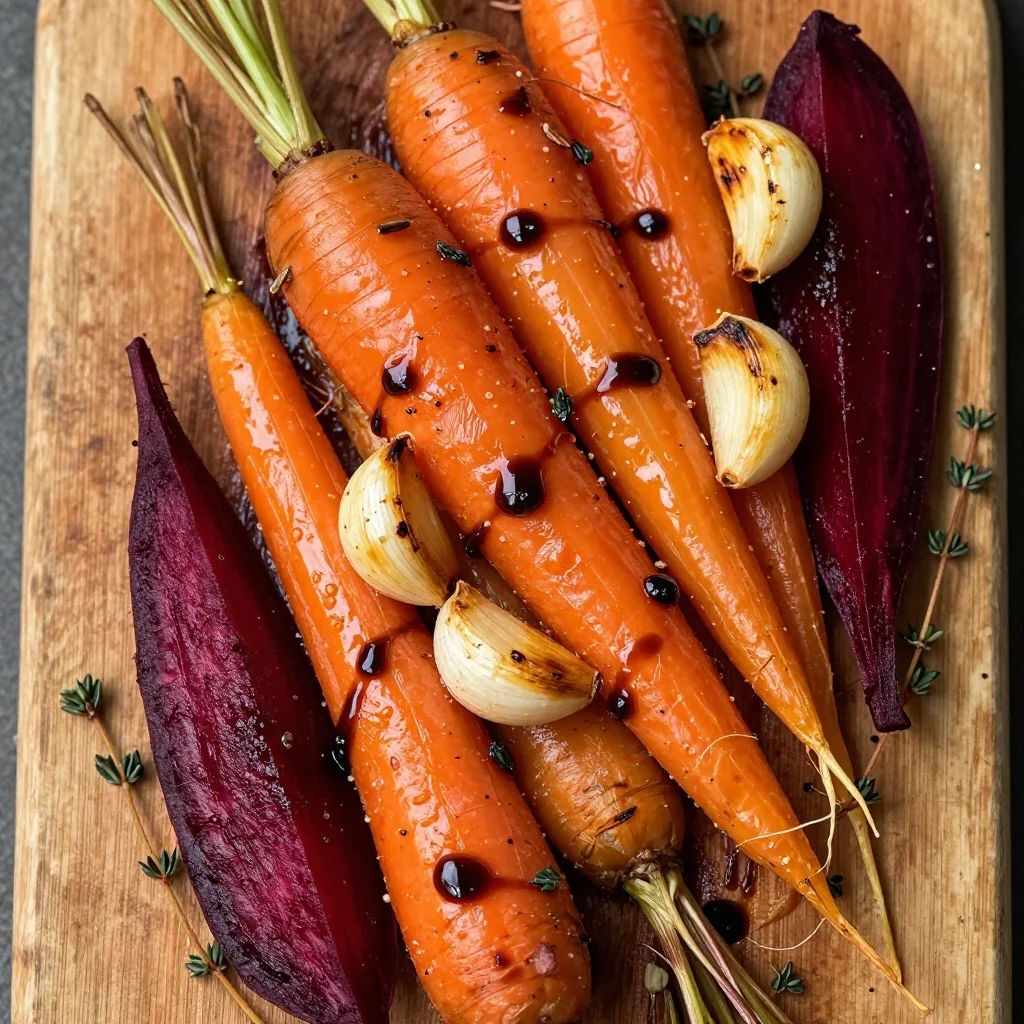
Whisk balsamic vinegar and maple syrup together. Drizzle evenly over the vegetables, then use the spatula to fold everything gently; you want to coat, not drown. Return to the oven for 8–10 minutes more, just until the vinegar reduces to a sticky lacquer and the edges look candied.
Finish and serve
Taste a beet: it should be tender all the way through with a whisper of resistance. If needed, roast 5 minutes more. Scatter fresh thyme leaves over the top for color contrast. Serve hot or warm; leftovers are sublime cold, tossed into grain bowls with a swipe of goat cheese.
Expert Tips
Use preheated stoneware
Place your empty sheet pan in the oven while it preheats. When vegetables hit hot metal, they sear instantly, locking in moisture and preventing stickage.
Save the beet greens
Wash, chop, and sauté with olive oil and garlic for a five-minute side dish. They taste like spinach with an earthy backbone.
Double the glaze
If you love sticky sweetness, whisk extra balsamic and maple and reduce it in a saucepan until syrupy. Drizzle tableside for dramatic flair.
Crank up convection at the end
For the final 3 minutes, switch to convection if you have it. The fan blasts away steam and creates micro-blisters on the vegetable edges.
Variations to Try
- Moroccan twist: Swap thyme for 1 teaspoon each ground cumin and coriander, add a pinch of cinnamon, and finish with chopped dates and toasted almonds.
- Asian-inspired: Replace balsamic with tamari, maple with mirin, and add a knob of grated ginger. Garnish with sesame seeds and scallions.
- Root & fruit: Toss in thick orange wedges or apple slices during the last 15 minutes; the fruit juices mingle with the glaze for sweet-and-sour pop.
- Smoky heat: Add ½ teaspoon smoked paprika and a pinch of cayenne to the oil. Finish with a squeeze of lime for brightness.
Storage Tips
Refrigerator: Cool completely, transfer to an airtight container, and refrigerate up to five days. The glaze will thicken; loosen with a splash of water or broth when reheating.
Freezer: Spread cooled vegetables in a single layer on a parchment-lined sheet pan and freeze until solid, then transfer to a zip-top bag. They’ll keep three months; reheat from frozen at 400°F for 12–15 minutes.
Make-ahead: Chop vegetables up to two days ahead and store submerged in cold salted water to prevent oxidation. Drain and pat very dry before roasting.
Frequently Asked Questions
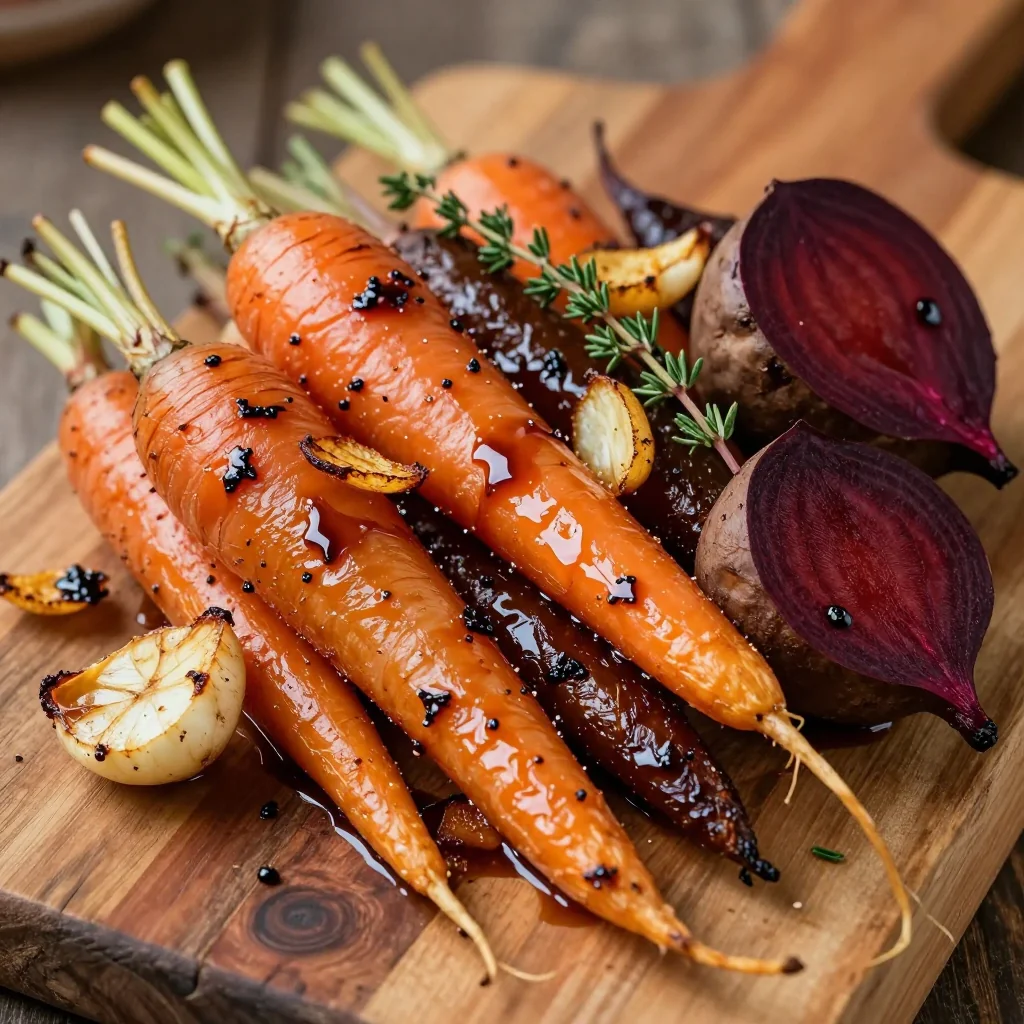
Roasted Root Vegetables with Garlic and Balsamic Glaze for Cold Days
Ingredients
Instructions
- Preheat and season: Preheat oven to 425°F. Line two rimmed sheet pans with parchment for easy cleanup. In a large bowl, toss carrots, parsnips, beets, turnip, onion, garlic, olive oil, salt, pepper, and thyme until evenly coated.
- Arrange cut-side down: Spread vegetables in a single layer, ensuring flat edges touch the pan. Separate denser beets and carrots on one pan, quicker-cooking parsnips and onions on the other.
- Roast undisturbed: Roast 20 minutes. Flip with a thin spatula, rotate pans, and roast 10 minutes more.
- Glaze: Whisk balsamic and maple together. Drizzle over vegetables, toss gently to coat, and roast 8–10 minutes until glaze bubbles and edges caramelize.
- Serve: Taste for tenderness; roast 5 minutes longer if needed. Transfer to a platter, spooning any sticky pan juices over the top. Garnish with fresh thyme leaves.
Recipe Notes
For extra color, use a mix of red and golden beets. Wear gloves when handling red beets to avoid stained fingers.