Picture this: it’s a sweltering Saturday afternoon, the kind where the sun feels like it’s trying to melt the very air, and you’ve just been dared by your most competitive friend to bring the “most unforgettable party drink” to the backyard bash. I was standing there, clutching a half‑empty bottle of cheap white wine, feeling the weight of that dare like a brick in my hand. The kitchen was a chaotic symphony of clanking glasses, a rogue blender whirring louder than the neighbor’s lawn mower, and a lingering scent of burnt toast from an earlier culinary misadventure. I could almost hear the collective sigh of disappointment from the crowd as I fumbled with a bland, over‑sweetened punch that tasted like a soda‑filled bathtub. That disaster sparked a fire in me, a determination to create something that would not just meet the challenge but obliterate it.
Fast forward a few weeks, and I’m standing in my pantry, eyes locked on a bottle of pink Moscato that glimmers like liquid rose quartz. The aroma that wafts up is a seductive blend of peach blossoms and ripe strawberries, promising a taste that’s both delicate and daring. I pour a splash into a glass, and the fizz tickles my nose, releasing a citrusy whisper that makes my mouth water before the first sip even lands. The sound of ice cubes cracking as they tumble into a pitcher is the soundtrack of anticipation, and the bright pink hue of the mixture looks like it was painted by a master artist who loves summer. When the first spoonful of fresh strawberries hits my tongue, it’s a burst of juicy sweetness that dances with the subtle acidity of orange juice, while the Sprite adds a playful sparkle that keeps the drink lively and light.
This version of pink Moscato sangria is not just another cocktail; it’s a celebration in a glass, a drink that whispers “summer forever” even when the calendar says otherwise. Most sangria recipes either drown the fruit in too much wine or drown the wine in a sea of sugary soda, leaving you with a cloying mess that feels like drinking a dessert rather than a refreshing libation. I’ve cracked the code by balancing the floral notes of Moscato with just enough citrus zing and fruit freshness, creating a harmony that feels like a perfectly tuned choir. The secret? A splash of triple sec that adds depth without overpowering, and a handful of mint that lifts the whole thing into the realm of the unforgettable.
Let me walk you through every single step — by the end, you’ll wonder how you ever made it any other way. I’ll spill the beans on the exact ratios, the tiny hacks that turn a good sangria into a legendary one, and the little tricks that keep the flavors bright for hours. Ready to become the hero of your next gathering? Okay, ready for the game‑changer?
What Makes This Version Stand Out
- Flavor Harmony: The blend of pink Moscato with fresh orange juice and a hint of triple sec creates a layered taste that’s sweet, tangy, and subtly floral—all in perfect balance.
- Texture Delight: The combination of crisp ice cubes, juicy fruit slices, and a gentle fizz from Sprite gives each sip a refreshing mouthfeel that dances on the palate.
- Simplicity: You only need a handful of ingredients and a single pitcher; no fancy tools or long marinating times required.
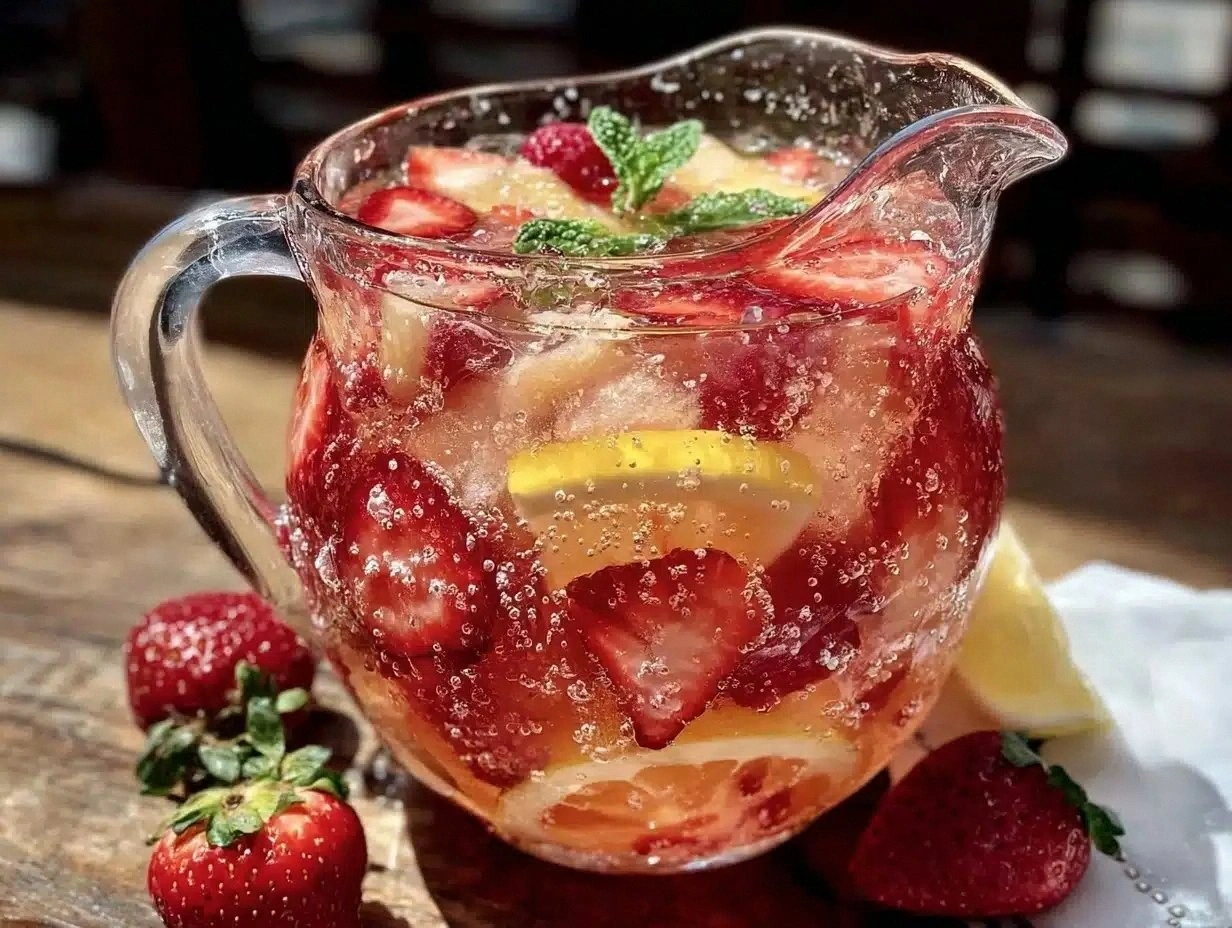
- Unique Visual Appeal: The vibrant pink hue, speckled with ruby strawberries and orange slices, makes it look as festive as it tastes.
- Crowd Reaction: I dare you to taste this and not go back for seconds—people keep asking for the recipe, and the compliments keep rolling in.
- Ingredient Quality: Using a quality pink Moscato with natural floral notes elevates the entire drink, turning a simple punch into a sophisticated cocktail.
- Make‑Ahead Potential: This sangria holds up beautifully for a few hours, letting you prep in advance and focus on the party.
- Versatility: Whether you’re serving it at a brunch, a garden party, or a casual evening, it fits the vibe like a glove.
Inside the Ingredient List
The Flavor Base
Pink Moscato wine: This is the star of the show! Choose a bottle you love (my personal favorite is La Marca Rosé for its floral notes). The wine’s natural sweetness and light effervescence set the foundation, providing a fragrant backdrop that carries the fruit flavors without overwhelming them. Skipping the Moscato and using a dry white will make the sangria taste flat and lose that signature pink blush. If you can’t find pink Moscato, a dry rosé with a hint of fruit will work, but the result won’t be as vibrant.
The Citrus Spark
Orange juice: Freshly squeezed is best, but store‑bought works too for convenience. The juice adds a bright acidity that cuts through the wine’s sweetness, creating a balanced palate. Without it, the drink leans too sugary, and the flavor profile becomes one‑dimensional. If you’re out of oranges, a splash of grapefruit juice can add a slightly bitter edge that’s surprisingly refreshing.
Sprite or Lemon‑Lime Soda: Adds a bubbly sweetness and a hint of citrus. The carbonation lifts the drink, making it feel lighter on the tongue. Using a diet version will reduce sugar but also diminish the full‑bodied fizz that makes this sangria pop. For a less sweet version, swap half the soda with sparkling water.
The Unexpected Star
Triple sec or orange liqueur: A splash of this boosts the orange flavor—skip it if you’re keeping things alcohol‑free, but you’ll miss out on that subtle depth that ties the fruit together. A tablespoon or two is enough; too much will make the drink taste like a candy store. If you don’t have triple sec, a dash of orange extract can mimic the aroma, though it won’t add the same warmth.
The Texture Crew
Fresh strawberries: Sliced thinly for vibrant color and juicy sweetness. They soak up the liquid, releasing their natural sugars and creating pockets of flavor throughout the pitcher. If you use frozen strawberries, they’ll dilute the drink as they thaw. For a twist, try adding a few sliced kiwi pieces for a tropical note.
Sliced oranges: For a burst of citrus flavor and stunning visual appeal. The orange slices add a zesty aroma and a pleasant bite that complements the Moscato’s floral notes. Skipping them makes the drink lose that refreshing citrus punch. If you’re allergic to oranges, try thinly sliced blood oranges for a deeper hue.
Fresh raspberries: Optional, but they add a tart balance and look gorgeous floating in the pitcher. Their slight acidity cuts through the sweetness, preventing the sangria from becoming cloying. If you omit raspberries, consider adding a handful of pomegranate seeds for a similar pop.
Ice cubes: To keep your sangria chilled and refreshing. Use large cubes to melt slower, preserving the flavor intensity. Small cubes melt quickly and water down the drink. If you want a fancy touch, freeze some of the juice into ice cubes for extra flavor.
Mint leaves: (Optional) For a fresh, aromatic touch that lifts the whole concoction. Mint adds a cooling sensation that pairs beautifully with the fruit. Over‑minting can dominate the profile, so a handful is sufficient. If mint isn’t your thing, basil leaves can add an herbaceous twist.
Everything's prepped? Good. Let's get into the real action...
The Method — Step by Step
Start by selecting a large, clear pitcher—something at least 2‑liter capacity. Pour the entire bottle of pink Moscato into the pitcher, letting the wine cascade over the sides. You’ll hear that gentle fizz, a sound that signals the beginning of something special. Give the wine a quick swirl to coat the glass interior, which helps release its aromatic compounds.
Next, add the freshly squeezed orange juice. I recommend using about one cup (240 ml) for a balanced tang. As you pour, watch the liquid turn a richer, sunset‑orange shade, a visual cue that the flavors are beginning to meld. Stir gently with a wooden spoon, allowing the citrus to mingle with the Moscato’s floral notes.
Now comes the sparkle: pour in one cup of Sprite or lemon‑lime soda. The carbonation lifts the mixture, creating a lively froth that dances on the surface. If you’re aiming for a less sweet version, replace half of the soda with sparkling water. Power transition: this is the moment of truth—watch the bubbles rise and imagine the party guests’ smiles.
Time to introduce the triple sec. Add two tablespoons (30 ml) of orange liqueur, which deepens the citrus backbone without making it overpowering. This step is optional for those who prefer a non‑alcoholic version, but trust me, the subtle warmth it brings is worth it.
Kitchen Hack: Use a jigger to measure the triple sec precisely; a little goes a long way.Introduce the fruit. Toss in the thinly sliced strawberries, orange wedges, and optional raspberries. The fruit should float like a vibrant mosaic, each piece releasing its juices into the liquid. If you notice the strawberries sinking, give the pitcher a gentle shake—this distributes the fruit evenly and prevents any one flavor from dominating.
Drop in a generous handful of fresh mint leaves. The mint will wilt slightly, releasing a refreshing aroma that lifts the whole drink.
Watch Out: If you add mint too early, it can become bitter; add it just before serving for the freshest flavor.Finally, fill the pitcher with ice cubes—about two cups (480 ml). The ice not only chills the sangria but also slightly dilutes the sweetness, balancing the flavors as it melts slowly. Give the entire mixture a final, gentle stir, ensuring every component is fully integrated. At this point, the scent should be a heady mix of fruit, citrus, and a whisper of floral wine.
Let the sangria sit for at least 15 minutes before serving. This rest period allows the fruit to infuse the liquid, creating a harmonious blend where each sip feels cohesive. If you’re in a hurry, a 5‑minute chill will still be enjoyable, but the depth of flavor truly blossoms after the short wait. And now the fun part: pour into glasses, garnish with an extra strawberry or mint sprig, and watch your guests' eyes light up.
That’s it—you did it. But hold on, I’ve got a few more tricks that’ll take this to another level. Stay with me here — this is worth it.
Insider Tricks for Flawless Results
The Temperature Rule Nobody Follows
Never, ever use wine that’s been sitting in a warm kitchen for hours. Chill your pink Moscato in the fridge for at least two hours before you start. The colder the wine, the better it holds its effervescence when mixed with soda. I once tried using room‑temperature wine and the fizz vanished instantly, leaving a flat, sad drink.
Why Your Nose Knows Best
Before you pour, give the wine a quick sniff. If you detect any off‑notes like vinegar or a musty smell, discard it. The aroma is the first indicator of quality, and a good nose can save you from an embarrassing batch. Trust your senses—they’re more reliable than any recipe metric.
The 5‑Minute Rest That Changes Everything
After mixing, let the sangria rest uncovered for five minutes. This short pause allows the carbonated soda to settle slightly, preventing it from foaming over when you pour into glasses. It also gives the fruit a chance to release its juices, intensifying the flavor without extra effort.
Ice Cube Strategy
Freeze a portion of the orange juice into ice cubes. As they melt, they add more citrus flavor instead of diluting the drink. I’ve tried regular ice and ended up with a watered‑down sangria after an hour; the juice‑ice trick keeps the taste vibrant.
Mint Timing Mastery
Roughly tear the mint leaves before adding them, rather than dropping whole sprigs. This bruises the leaves, releasing essential oils faster. If you add whole sprigs too early, the mint can become bitter. A quick tear right before serving keeps the flavor bright and aromatic.
Creative Twists and Variations
This recipe is a playground. Here are some of my favorite ways to switch things up:
Tropical Sunset
Swap the orange juice for pineapple juice and add a splash of coconut water. The result is a beach‑vibe sangria that pairs perfectly with grilled shrimp. Pineapple’s natural acidity balances the Moscato’s sweetness while coconut adds a creamy undertone.
Berry‑Bomb Explosion
Replace strawberries with a mix of blackberries and blueberries, and add a handful of fresh mint. This version leans into deep berry flavors, creating a richer, more complex profile that’s perfect for fall gatherings.
Spicy Spark
Introduce a thin slice of jalapeño or a pinch of cayenne pepper. The subtle heat contrasts the sweet fruit, delivering a surprising kick that awakens the palate. Just a little spice goes a long way—don’t overdo it.
Non‑Alcoholic Delight
Omit the pink Moscato and replace it with sparkling white grape juice. Keep the triple sec optional or swap it for a non‑alcoholic orange essence. The drink remains vibrant and festive, suitable for kids or designated drivers.
Herbal Infusion
Add a sprig of rosemary or thyme alongside the mint for an earthy aroma. The herbs complement the citrus and fruit, giving the sangria a sophisticated garden‑party vibe.
Champagne Upgrade
For an extra‑fancy twist, substitute half of the Moscato with Brut Champagne. The dryness of the Champagne adds a refined edge, making the sangria suitable for bridal showers or upscale events.
Storing and Bringing It Back to Life
Fridge Storage
Transfer any leftovers to a sealed glass jar and store in the refrigerator for up to 48 hours. The fruit will continue to infuse, so the flavor actually deepens. Before serving again, give the pitcher a gentle stir and add fresh ice if needed.
Freezer Friendly
If you anticipate a large batch, pour the sangria (without ice) into freezer‑safe containers, leaving about an inch of headspace. Freeze for up to two months. Thaw in the fridge overnight, then re‑add soda and ice just before serving to retain the fizz.
Best Reheating Method
While sangria is best served cold, you can gently warm it for a cozy winter twist. Place the liquid (minus soda) in a saucepan over low heat, adding a splash of water to prevent scorching. Once warm, stir in fresh soda and serve over ice for a “hot‑cold” novelty.