It started on a rainy Thursday, the kind of night where the only thing that could lift the gloom was a pot of soup. I was rummaging through the fridge, half‑heartedly trying to salvage last night’s leftovers, when a stray chicken breast and a bag of frozen peas stared back at me like a challenge. I laughed, grabbed my skillet, and declared, “You’re going to taste the most comforting, protein‑packed chicken pot pie you’ve ever had.” The kitchen was a mess—spilled flour, a burnt onion, a pot that was already halfway full of broth—but I was determined. By the time the storm had cleared, the air was thick with the scent of simmering vegetables, and the sound of bubbling broth was a symphony of comfort. That night, I tasted the first spoonful and swore, “I dare you to taste this and not go back for seconds.” That’s the kind of bold promise that will guide you through every step of this recipe.
The beauty of this version lies in its balance. It’s creamy yet light, protein‑heavy yet not cloying, and it manages to hit every flavor profile—sweetness from carrots, earthiness from potatoes, a hint of green from peas, and that unmistakable savory depth that only real chicken broth can deliver. What sets it apart is the unexpected use of a simple roux, which coats the soup like velvet, creating a silky mouthfeel that feels indulgent without the guilt. I’ve tried countless pot pie soups, but none have achieved this harmony. The result is a dish that feels like a hug in a bowl, and it’s hands down the best version you’ll ever make at home.
Picture yourself pulling this out of the oven, the whole kitchen smelling incredible, and knowing that every bite is packed with protein, nutrients, and pure comfort. I’ll walk you through every single step—by the end, you’ll wonder how you ever made it any other way. If you’ve ever struggled with bland soups or over‑thickened stews, you’re not alone—and I’ve got the fix. Let’s dive in.
What Makes This Version Stand Out
- Flavor: The broth is the backbone—rich, savory, and full of umami, thanks to the homemade chicken stock.
- Texture: The roux gives the soup a velvety thickness without clumping, while the diced potatoes add a satisfying bite.
- Protein: Shredded chicken delivers a hearty protein punch that keeps you satisfied longer.
- Vegetable Balance: Carrots, celery, and peas provide color, sweetness, and a pop of green that make the dish visually appealing.
- Ease: Every step is straightforward—no fancy techniques, just good timing and a few simple ingredients.
- Make‑Ahead: This soup keeps well in the fridge and even tastes better the next day, making it a perfect weeknight or meal‑prep option.
- Versatility: Swap in your favorite herbs or add a dash of smoked paprika for a smoky twist.
- Nutrition: Each serving delivers a balanced mix of protein, carbs, and healthy fats, ideal for active lifestyles.
Alright, let’s break down exactly what goes into this masterpiece…
Inside the Ingredient List
The Flavor Base
At the heart of this soup is the broth. I use a homemade chicken stock that’s simmered with a mirepoix of onions, carrots, and celery for at least 45 minutes. The longer it simmers, the deeper the flavor. If you’re short on time, a good quality store‑bought broth works, but I’ll bet you’ll taste the difference. Skipping the broth means losing the savory foundation that makes the rest of the ingredients sing.
The Texture Crew
Potatoes are the secret to a satisfying bite. They absorb liquid, swell, and create a heartier mouthfeel. Dice them into 1/2‑inch cubes so they cook evenly. Carrots add a gentle sweetness that balances the earthiness of the potatoes, while celery provides a subtle crunch that breaks up the creamy texture. Peas are the pop‑of‑color hero that also offers a sweet burst of flavor—don’t skip them or the soup will feel flat.
The Unexpected Star
The roux—made from butter and flour—might look ordinary, but it’s the star that turns a simple broth into a silky, velvety soup. It thickens without making the soup gummy, and it carries the flavors of thyme and garlic powder beautifully. The trick is to cook the roux just until it turns a light golden color; overcooking will give it a nutty taste that can overpower the dish.
The Final Flourish
Heavy cream is the final touch that adds richness without tipping the soup into heaviness. It gives the dish a luxurious mouthfeel and helps the flavors meld. The dried thyme and garlic powder are the aromatics that elevate the soup, but you can experiment with smoked paprika or a pinch of cayenne if you want a subtle kick. Salt and pepper are essential for balancing the flavors—taste as you go and adjust accordingly.
Everything’s prepped? Good. Let’s get into the real action.
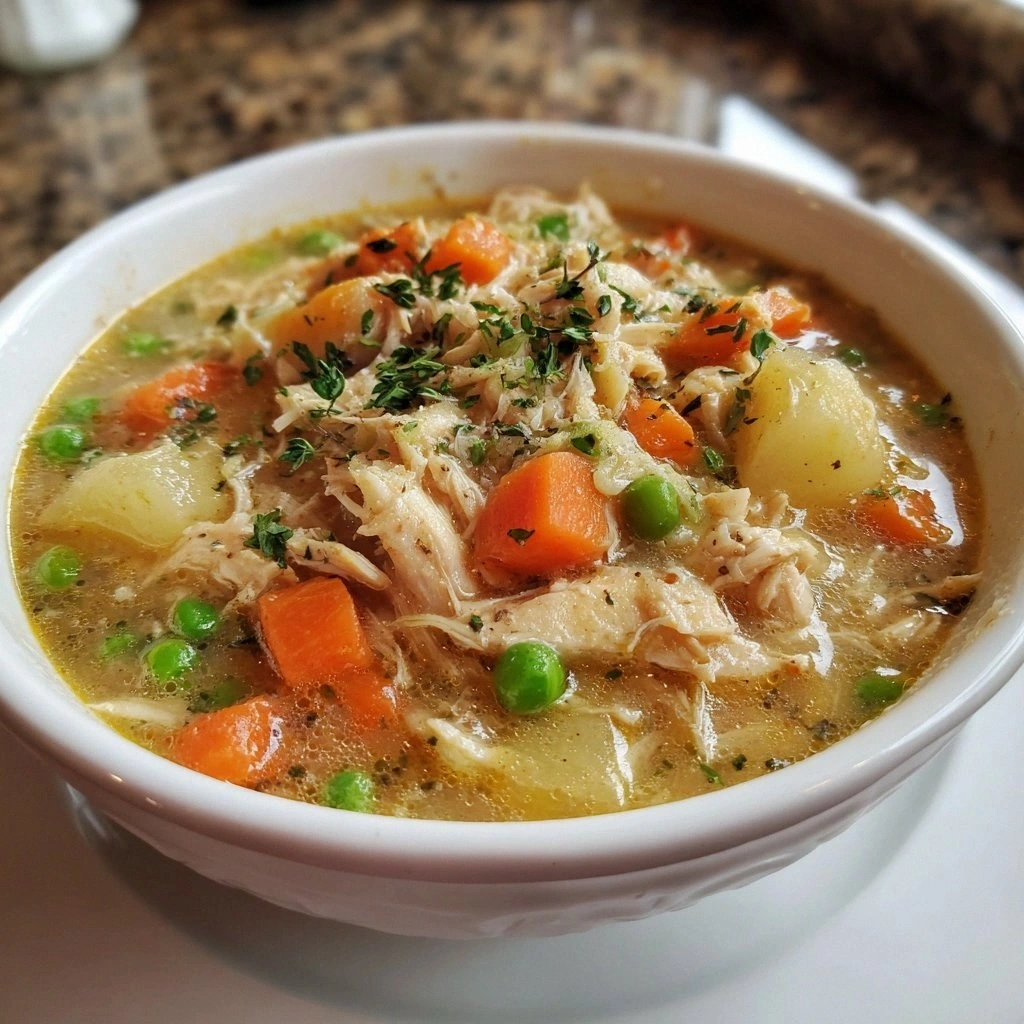
The Method — Step by Step
- Heat a large, heavy‑bottomed pot over medium heat. Add the butter and let it melt, watching for the gentle bubbling. Once the butter is foamy, sprinkle in the flour and stir constantly with a whisk. The mixture should become a pale paste—this is your roux. Keep it moving; the goal is a smooth, lump‑free base that will thicken the broth without clumping. The roux should be golden for about 1–2 minutes—if it’s still pale, it’s undercooked; if it’s dark brown, it’s overcooked and will taste nutty.
- Gradually pour in the chicken broth, whisking vigorously to incorporate the roux. The mixture should start to thicken almost immediately, creating a creamy base. Stir for another minute to ensure everything is well blended. At this point, add the diced potatoes and stir to coat them in the roux‑broth mixture. The potatoes will begin to soften, releasing starch that further thickens the soup.
- Add the diced carrots, celery, and peas, along with the dried thyme and garlic powder. Stir everything together, making sure the vegetables are evenly distributed. Bring the mixture to a gentle simmer, then reduce the heat to low. Cover the pot and let it cook for about 15 minutes, or until the potatoes are fork‑tender. This step allows the vegetables to infuse the broth with their natural sweetness and aroma.
- Once the vegetables are tender, stir in the shredded chicken. The chicken is pre‑cooked, so it only needs to heat through, which takes about 5 minutes. This keeps the meat moist and prevents it from drying out. Taste the soup and season with salt and pepper to your liking. Remember, the broth is already seasoned, so add just enough to brighten the flavors.
- Pour in the heavy cream, stirring until fully incorporated. The cream will give the soup that luxurious, silky finish. Allow the soup to simmer gently for another 5 minutes—this helps the cream meld with the broth and the roux, creating a cohesive texture. Keep an eye on the heat; you want it low enough to avoid scorching the cream.
- If the soup feels too thick, add a splash of additional broth or water until you reach your desired consistency. Conversely, if it’s too thin, let it simmer uncovered for a few minutes to reduce. This final adjustment ensures the soup is silky and not soupy.
- Once everything is heated through and the flavors have melded, remove the pot from the heat. Let the soup rest for 5 minutes—this resting period allows the flavors to settle and the soup to thicken slightly as it cools.
- Serve hot in bowls, optionally garnished with chopped fresh parsley or a sprinkle of grated Parmesan for an extra layer of flavor. The aroma alone will make your guests ask for seconds. And if you’re feeling extra generous, drizzle a little extra heavy cream on top for that extra creamy touch.
That’s it—you did it. But hold on, I’ve got a few more tricks that’ll take this to another level. These insider tips will help you avoid common pitfalls and elevate the dish’s flavor profile.
Insider Tricks for Flawless Results
The Temperature Rule Nobody Follows
Many cooks assume that simmering at any low temperature works, but the key is to maintain a gentle, steady simmer. If the heat is too high, the broth will boil over, and the vegetables will break apart. A low simmer ensures even cooking and preserves the delicate flavors of the herbs.
Why Your Nose Knows Best
Before you add the heavy cream, pause and sniff the soup. A subtle, comforting aroma indicates that the broth is fully developed. If you notice a sharp, raw chicken smell, let it continue cooking a bit longer to integrate the flavors.
The 5‑Minute Rest That Changes Everything
After removing the pot from heat, let the soup sit uncovered for 5 minutes. This resting period allows the vegetables to release their juices, the roux to set, and the flavors to marry. Skipping this step can leave the soup feeling rushed and under‑developed.
A Touch of Acid for Balance
Adding a splash of white wine vinegar or lemon juice just before serving brightens the flavors and cuts through the richness. It’s a simple trick that elevates the dish from good to unforgettable.
The Perfect Garnish
Fresh herbs like parsley, thyme, or chives add a burst of color and freshness that contrast the creamy base. A sprinkle of grated Parmesan or a dash of smoked paprika can also add a savory kick that complements the chicken.
Creative Twists and Variations
This recipe is a playground. Here are some of my favorite ways to switch things up:
Smoky Chipotle Twist
Add a teaspoon of chipotle in adobo sauce for a smoky, spicy kick that pairs beautifully with the creamy base. It’s perfect for those who like a little heat.
Herb‑Infused Mediterranean
Swap the thyme for oregano and add a handful of chopped spinach or kale. Finish with a drizzle of olive oil and a squeeze of lemon for a Mediterranean flair.
Sausage & Spinach Variation
Replace the chicken with sliced Italian sausage and stir in fresh spinach at the end. The sausage adds a savory depth while the spinach adds a pop of green.
Curry‑Spiced Version
Replace the garlic powder with curry powder and add a splash of coconut milk instead of heavy cream. This gives the soup an exotic, comforting flavor.
Low‑Calorie Lightening
Use low‑fat milk instead of heavy cream and reduce the flour by half. The soup will still be creamy but with fewer calories, ideal for weight‑watchers.
Cheesy Finale
Stir in a cup of shredded cheddar or Gruyère at the end for a gooey, indulgent finish. It’s a crowd‑pleaser for kids and adults alike.
Storing and Bringing It Back to Life
Fridge Storage
Cool the soup completely before transferring it to airtight containers. Store in the refrigerator for up to 4 days. Reheat gently on the stove, adding a splash of water if it’s thickened.
Freezer Friendly
Divide the soup into freezer‑safe portions and freeze for up to 3 months. Thaw overnight in the fridge before reheating. The soup’s texture remains creamy, especially if you stir in a little extra cream when reheating.
Best Reheating Method
Reheat on low heat, stirring frequently. Add a tiny splash of water or broth before heating to restore moisture. This trick ensures the soup returns to its silky, velvety consistency.