I was standing in my kitchen, staring at a half‑cooked pot of plain couscous that looked more like a sad little snowdrift than anything worth serving. The clock ticked, my roommate was humming a tune that sounded suspiciously like “I’ll be back in five minutes,” and my stomach was growling louder than a subway train. I dared myself to turn this disaster into something unforgettable, and that’s how the idea for the ultimate Feta Pomegranate Couscous Salad was born. I grabbed a handful of pomegranate seeds, a block of feta, and a fresh bunch of mint, and I thought, “What if I could make a salad that sings, dances, and maybe even does a little tap‑dance on my taste buds?”
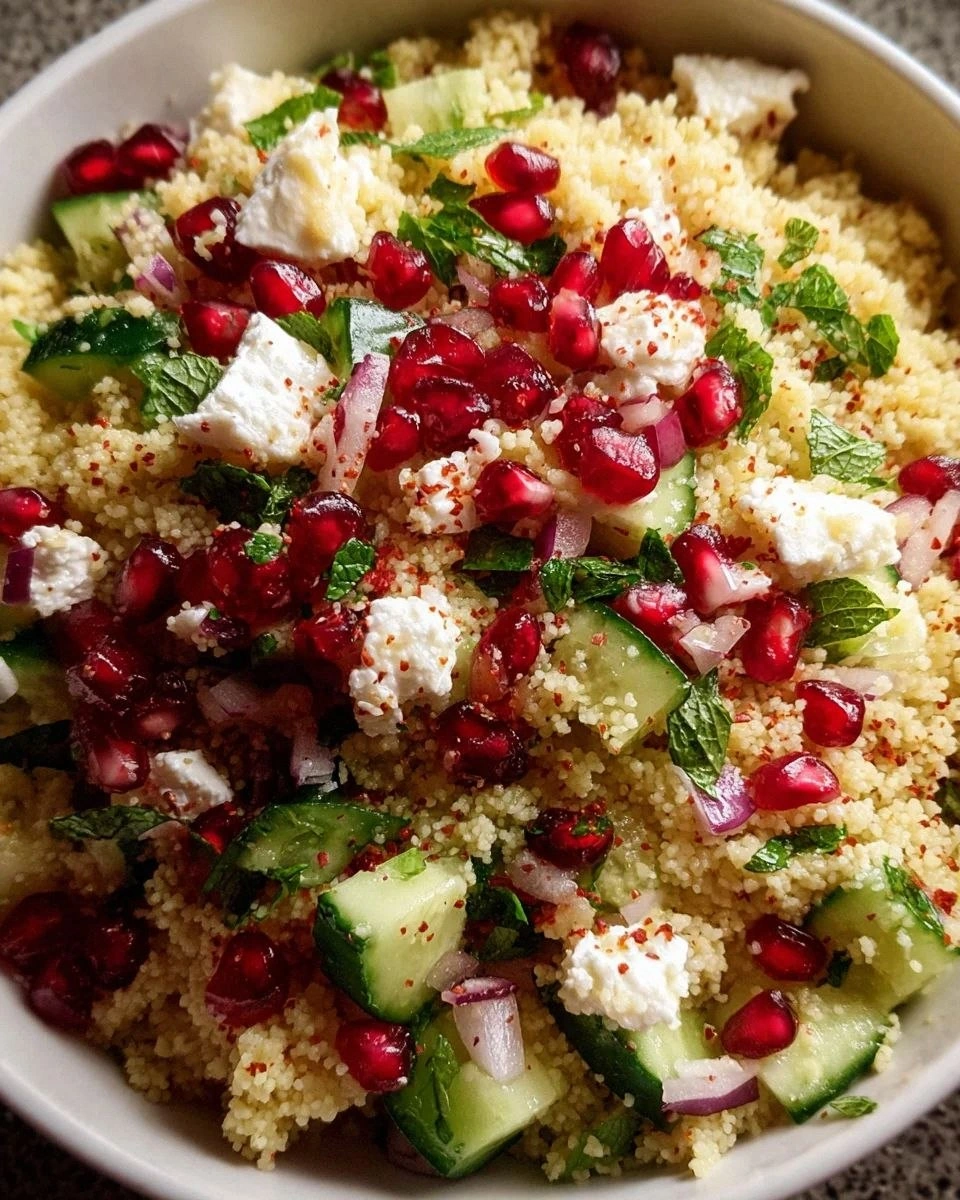
Picture this: the couscous, fluffy as a cloud, soaked in a lemon‑olive oil vinaigrette that glistens like sunrise on a calm sea. The feta crumbles like soft snowflakes, each bite delivering a salty pop that makes your palate do a happy jig. Then there’s the pomegranate, those ruby‑red jewels that burst with a sweet‑tart crunch, followed by cucumber’s cool snap and the herbaceous perfume of parsley and mint. The whole thing is tossed together in a bowl that looks like a piece of modern art, and the aroma? It’s a fragrant chorus of citrus, earth, and a whisper of cumin that makes you want to inhale deeply and never let go.
Most recipes I’ve tried either drown the couscous in a soggy swamp of dressing or forget the magic of fresh herbs, leaving the dish flat and forgettable. This version, however, respects each component like a well‑rehearsed orchestra, letting the couscous stay light, the feta stay creamy, and the pomegranate stay crisp. I’m not just talking about a salad; I’m talking about a culinary experience that will have you saying, “I dare you to taste this and not go back for seconds.” And trust me, I’ve already eaten half the batch before anyone else got a spoon.
But here’s the kicker: I’m going to introduce a technique that most home cooks skip entirely—the “toast‑then‑steam” method for couscous. It’s a simple two‑step that turns ordinary couscous into a fluffy, aromatic base that holds dressing like a dream. Let me walk you through every single step — by the end, you’ll wonder how you ever made it any other way.
What Makes This Version Stand Out
- Flavor Explosion: The combination of tangy lemon, earthy cumin, and sweet pomegranate creates a layered taste that evolves with each bite, keeping you engaged from first forkful to last.
- Texture Symphony: You get fluffy couscous, crunchy cucumber, juicy pomegranate seeds, and creamy feta—all in one harmonious mouthful.
- Simplicity: Only ten core ingredients, each doing heavy lifting, so you won’t need a pantry full of exotic spices.
- Unique Technique: Toasting the couscous before steaming gives it a nutty undertone most recipes completely miss.
- Crowd‑Pleaser: It’s vegetarian, gluten‑friendly, and looks Instagram‑ready, making it perfect for potlucks or fancy dinner parties.
- Ingredient Quality: Using high‑quality extra‑virgin olive oil and fresh herbs elevates the dish from everyday to restaurant‑level.
- Make‑Ahead Magic: The salad holds up beautifully for up to 24 hours, allowing flavors to meld and deepen.
- Seasonal Flexibility: Whether it’s a summer BBQ or a cozy winter gathering, this salad shines year‑round.
Inside the Ingredient List
The Flavor Base
Couscous is the heart of this salad, a tiny pasta that soaks up flavors like a sponge at a spa. When you toast it first, you introduce a gentle, roasted note that pairs beautifully with the lemony brightness of the dressing. Skipping the toast step means you lose that depth, and the salad can taste a little flat, like a song without a bass line. If you can’t find traditional couscous, try Israeli pearl couscous for a slightly chewier bite.
The Texture Crew
Pomegranate seeds are the surprise party in every spoonful—bursting with juicy sweetness that cuts through the salty feta. Cucumber adds a refreshing crunch that balances the richness, while red onion contributes a subtle bite that awakens the palate. If you’re not a fan of raw onion, rinse the chopped pieces in cold water for a minute to mellow the sharpness without losing flavor.
The Unexpected Star
Fresh herbs—parsley and mint—are the unsung heroes that lift the entire dish into the realm of “wow.” Parsley brings an earthy freshness, while mint adds a cool, almost floral whisper that makes the salad feel lighter than air. Don’t over‑process them; a rough chop keeps the leaves intact, preventing the salad from turning into a green puree.
The Final Flourish
The dressing—extra‑virgin olive oil, fresh lemon juice, minced garlic, and ground cumin—binds everything together with a silky sheen. Olive oil adds richness, lemon provides zing, garlic offers depth, and cumin introduces a warm, earthy undertone that ties the flavors together. If you’re looking for a lower‑fat version, replace half the oil with a splash of vegetable broth, but don’t skip the oil entirely—otherwise the couscous will feel dry.
Everything's prepped? Good. Let's get into the real action...
The Method — Step by Step
Start by heating a medium saucepan of water to a rolling boil. While you wait, measure out 1 cup of couscous and give it a quick rinse under cold water—this removes any surface starch that could make it gummy. Once the water is boiling, add a pinch of salt and the couscous, then immediately remove the pan from heat, cover, and let it sit for 5 minutes. The couscous will puff up, soaking up the water like a sponge, and you’ll hear a faint “sizzle” as the steam escapes—this is your first cue that it’s cooking correctly.
While the couscous is steaming, heat a dry skillet over medium heat. Add the couscous and toast it, stirring constantly, for about 2 minutes until you detect a nutty aroma that makes you think of toasted almonds. This step is pure magic; it adds a depth of flavor that most recipes miss.
Kitchen Hack: Use a wooden spoon to stir—the wood won’t conduct heat as quickly, giving you better control over the toast.Fluff the toasted couscous with a fork, then transfer it to a large mixing bowl. Drizzle 3 tablespoons of extra‑virgin olive oil over the grains, followed by 2 tablespoons of freshly squeezed lemon juice. Toss gently so each grain gets a light coating; the oil and lemon should cling like a delicate veil, not drown the couscous.
Now it’s time for the aromatics. Add one minced garlic clove, ½ teaspoon of ground cumin, and a pinch of freshly ground black pepper. Stir again, and you’ll notice the scent of cumin rising—a warm, earthy perfume that promises a flavor boost. If you’re sensitive to garlic, you can substitute with a pinch of garlic powder, but fresh minced garlic gives the brightest punch.
Dice one medium cucumber into bite‑size cubes, roughly 1 cup, and finely chop ¼ cup of red onion. Toss these into the bowl, letting the crisp cucumber and sharp onion mingle with the couscous. The cucumber’s coolness will contrast beautifully with the warm cumin, creating a balanced mouthfeel.
Chop a generous handful of fresh parsley and mint—about 2 tablespoons each. Sprinkle the herbs over the salad, and give everything a gentle toss. The green specks not only add color but also a burst of fresh flavor that lifts the entire dish.
Watch Out: Over‑mixing at this stage can bruise the herbs, turning them bitter. Fold gently.Gently fold in ½ cup of pomegranate seeds. Their ruby‑red pop adds a visual fireworks display and a sweet‑tart burst that makes each bite unforgettable. If you can’t find fresh pomegranate, frozen seeds work fine—just thaw them first and pat dry.
Finally, crumble 200 grams (about 1 cup) of feta cheese over the top. The feta should be added last so it remains slightly firm, offering creamy pockets amidst the crunchy elements. Give the salad one last light toss, just enough to distribute the feta without breaking it down completely.
Cover the bowl with a clean kitchen towel and let the salad rest for 10 minutes. This resting period allows the flavors to meld, the couscous to fully absorb the dressing, and the herbs to perfume the entire mixture. I dare you to taste this and not go back for seconds after this short wait.
Serve at room temperature, or if you prefer a cooler bite, chill for another 15 minutes. Either way, the salad will retain its vibrant colors and textures, making it the star of any spread. And now the fun part—watch your guests’ faces light up as they discover the hidden layers of flavor.
That's it — you did it. But hold on, I've got a few more tricks that'll take this to another level. Keep reading, because the next section is where the real chef‑level secrets drop.
Insider Tricks for Flawless Results
The Toast‑Then‑Steam Rule Nobody Follows
Most home cooks steam couscous straight away, missing out on the nutty depth that toasting provides. By toasting first, you create a Maillard reaction—a subtle browning that adds complexity. I once skipped this step and the salad tasted… well, bland. Trust me, the extra two minutes in a dry pan are worth every second of anticipation.
Why Your Nose Knows Best
When the lemon juice hits the couscous, you’ll notice a bright, citrusy perfume that should make your nose tingle. If you don’t smell that zing, add a splash more lemon—your palate will thank you later. A friend once said the lemon was “too subtle,” and after a quick extra squeeze, the entire salad transformed from “nice” to “knock‑your‑socks‑off.”
The 5‑Minute Rest That Changes Everything
Allowing the salad to sit for just five minutes after mixing lets the couscous soak up the dressing fully. Skipping this rest step results in a dry, under‑flavored bite. I’ve seen rushed versions where the couscous is still stubbornly separate—trust the timer, and you’ll get a cohesive, moist texture.
Herb Handling 101
Rough‑chop parsley and mint with a sharp chef’s knife, not a food processor. A blade keeps the leaves whole, preserving their bright green color and fresh flavor. One time I blitzed the herbs, and the salad ended up looking like a wilted green mush—lesson learned.
Salt Like a Pro
A pinch of salt may seem insignificant, but it amplifies every other flavor. Sprinkle it over the couscous before steaming, and you’ll notice the entire dish brightens up. Too much salt, however, can overwhelm the delicate pomegranate, so keep it modest.
Creative Twists and Variations
This recipe is a playground. Here are some of my favorite ways to switch things up:
Mediterranean Mezze Remix
Swap the mint for fresh dill and add a handful of Kalamata olives. The briny olives complement the feta, while dill adds a slightly anise‑like freshness. Perfect for a Greek‑themed spread.
Spicy Southwest Spin
Introduce a teaspoon of smoked paprika and a diced jalapeño. The smoky heat pairs beautifully with cumin, and the jalapeño gives a bright kick that balances the sweet pomegranate.
Protein‑Packed Power Bowl
Add grilled chicken breast strips or chickpeas for extra protein. The chicken adds a hearty texture, while chickpeas keep it vegetarian and boost fiber.
Autumn Harvest Version
Replace pomegranate seeds with dried cranberries and add toasted pumpkin seeds. The tart cranberries echo the pomegranate’s bite, while pumpkin seeds bring a nutty crunch perfect for cooler months.
Vegan Delight
Swap feta for a crumble of firm tofu marinated in lemon juice and nutritional yeast. The tofu mimics the salty creaminess, keeping the dish fully plant‑based without sacrificing texture.
Storing and Bringing It Back to Life
Fridge Storage
Transfer the salad to an airtight container and refrigerate for up to 24 hours. The flavors will meld, and the couscous will stay tender. Before serving, give it a quick stir and add a drizzle of olive oil if it looks a bit dry.
Freezer Friendly
While the fresh herbs don’t freeze well, you can freeze the couscous‑herb mixture without the pomegranate and feta. Portion into freezer bags, label, and store for up to 2 months. Thaw overnight in the fridge, then fold in fresh pomegranate seeds and feta before serving.
Best Reheating Method
If you prefer a warm salad, place the frozen or refrigerated portion in a skillet over low heat, adding a splash of water or broth—just enough to create steam. This revives the couscous’s fluffiness without turning it mushy. Remember, a little steam is the secret to bringing it back to life.