I remember the night I was supposed to impress my sister’s in‑law at a potluck, and the kitchen felt like a battlefield. A mis‑tasted stir‑fry, a burnt tofu, and a bowl of plain rice that seemed to have lost all soul. My sister’s eyes flicked over the spread, and I knew I had to bring something that would turn heads, not just fill a plate. The moment I opened the fridge and saw that half‑cooked chicken breast, I was like, “This is it. I’m going to make the most unforgettable Asian Peanut Chicken Salad you’ve ever tasted.”
Picture the aroma of toasted peanuts mingling with the bright citrus of lime, the sharpness of fresh ginger cutting through the sweetness of honey, and the subtle warmth of sesame oil. Imagine the crunch of shredded carrots and crisp cucumber, the silky sheen of the peanut sauce coating each bite like velvet. Hear the gentle snap of lettuce leaves as they mingle with the sauce, and feel the warmth of the bowl as you lift it to your lips. Taste the balance of salty, sweet, and tangy, and notice how every component sings in harmony rather than competing.
This isn’t just another salad; it’s a flavor explosion that turns any gathering into a culinary highlight. The secret? A sauce that coats every ingredient with a silky, nutty richness, a crunch that pops, and a freshness that lifts the entire dish. I dare you to taste this and not go back for seconds, because once you’ve had this, you’ll never settle for a plain green salad again. It’s hands down the best version you’ll ever make at home, and I’ve got the recipe to prove it.
If you’ve ever struggled with making a salad that feels substantial, you’re not alone. I’ve been there—spilling dressing on the table, tossing ingredients that never quite come together. That’s why I’ve spent hours tweaking this recipe, testing textures, balancing flavors, and finally landing on a version that feels like a hug in a bowl. Let me walk you through every single step—by the end, you’ll wonder how you ever made it any other way.
What Makes This Version Stand Out
- Taste: The sauce is a balanced blend of sweet, salty, and tangy, with a nutty undertone that lingers. It coats each bite, turning ordinary greens into a mouth‑watering experience.
- Texture: The crunchy roasted peanuts and crisp vegetables contrast beautifully with the silky sauce, creating a satisfying bite that keeps you coming back.
- Simplicity: Despite the complex flavor profile, the recipe is straightforward—no fancy equipment or hard‑to‑find ingredients.
- Uniqueness: The addition of toasted sesame seeds and a splash of rice vinegar gives it a distinct Asian twist that sets it apart from typical salads.
- Crowd Reaction: Friends who have tried this rave about how the dish can be a starter or a main, and how it pairs perfectly with grilled meats or tofu.
- Ingredient Quality: Using fresh, high‑quality produce and premium peanut butter elevates the dish to restaurant‑level flavor.
- Cooking Method: The quick pan‑sear of the chicken adds a savory depth that you can’t get from pre‑cooked or frozen chicken.
- Make‑Ahead Potential: The salad holds up beautifully for up to 24 hours in the fridge, and the dressing can be stored separately to keep the greens crisp.
Alright, let’s break down exactly what goes into this masterpiece…
Inside the Ingredient List
The Flavor Base
The sauce is the heart of this salad. It’s a marriage of peanut butter, soy sauce, lime juice, honey, rice vinegar, and sesame oil. Each ingredient plays a distinct role: the peanut butter provides creaminess and richness; soy sauce adds umami and saltiness; lime juice offers brightness; honey balances the acidity; rice vinegar gives a subtle tang; and sesame oil adds depth and a nutty aroma. Together, they create a sauce that coats every leaf like velvet, without weighing it down. If you skip any of these, the flavor profile will feel incomplete—think of it as a symphony missing a key instrument.
The Texture Crew
Crunch is essential for a satisfying salad. Roasted peanuts, shredded carrots, sliced cucumber, and thinly sliced red cabbage contribute layers of texture. The peanuts give a nutty crunch that pops in every bite, while the carrots and cucumber add a fresh, crisp bite. The cabbage provides a gentle crunch that holds up even after the dressing sits. If you skip the cabbage, the salad will feel flat; if you skip the peanuts, it will lack that essential nutty snap that defines the dish. A quick toss of toasted sesame seeds on top adds a subtle crunch and an extra layer of flavor.
The Unexpected Star
Fresh cilantro and green onions bring a burst of herbaceous freshness that cuts through the richness of the sauce. Their bright, slightly citrusy notes lift the entire dish, balancing the nutty and sweet elements. If you’re not a fan of cilantro, you can replace it with fresh mint or basil for a different twist. Skipping the herbs will make the salad feel less vibrant and more one‑dimensional. The green onions add a mild onion flavor that pairs beautifully with the savory sauce.
The Final Flourish
A squeeze of lime juice before serving brightens the dish and adds a zesty kick. A sprinkle of chili flakes gives a gentle heat that lingers on the palate, making the salad feel lively and complex. If you prefer a milder version, reduce or omit the chili flakes. The final flourish also includes a drizzle of extra sesame oil for a glossy finish. The combination of these finishing touches turns a simple salad into a gourmet experience.
Everything's prepped? Good. Let's get into the real action…
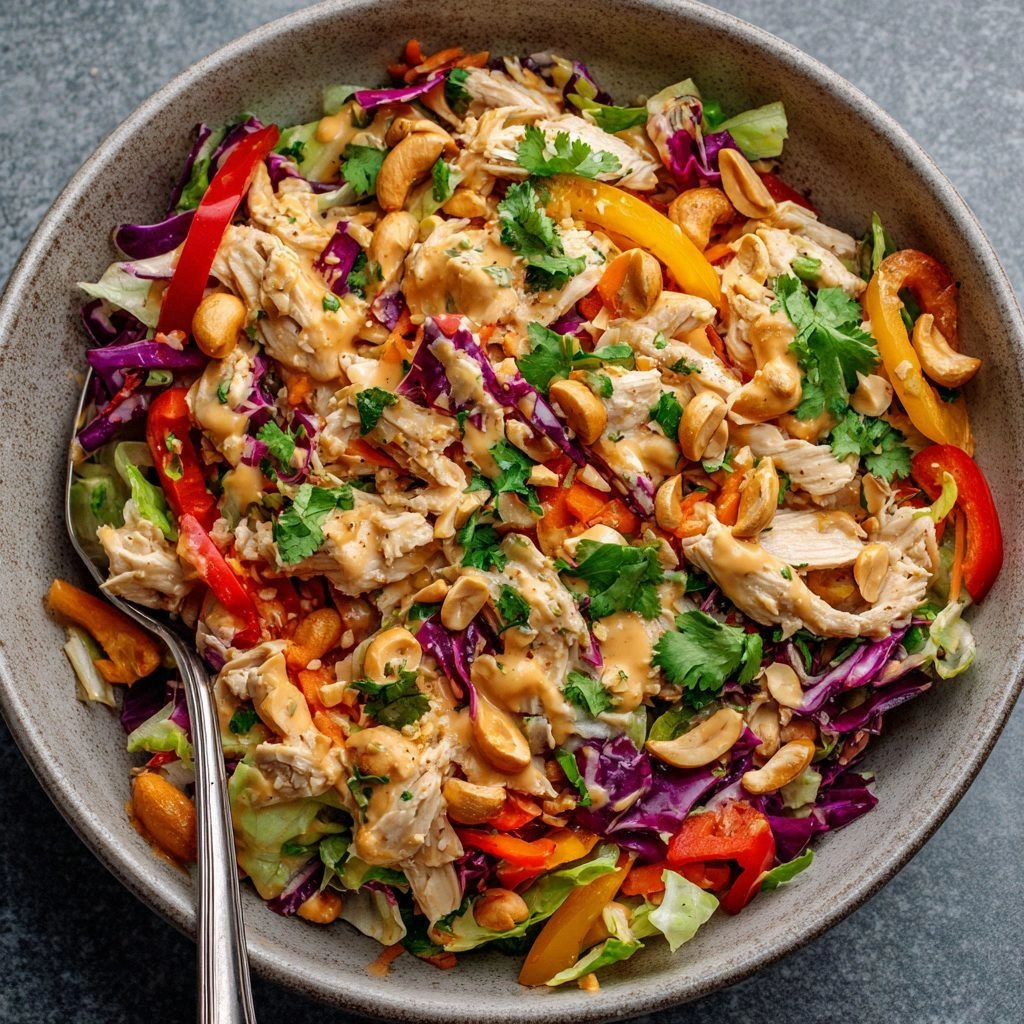
The Method — Step by Step
- First, heat a tablespoon of sesame oil in a large skillet over medium‑high heat. When the oil shimmers, add the shredded chicken and sear for 3–4 minutes on each side, or until golden and cooked through. The chicken should develop a caramelized crust that adds savory depth to the dish. Once cooked, remove it from the pan and let it rest for a minute before chopping it into bite‑size pieces.
- While the chicken rests, combine the peanut butter, soy sauce, lime juice, honey, rice vinegar, and a teaspoon of sesame oil in a small bowl. Whisk until the mixture is smooth and slightly thick. If the sauce feels too thick, add a splash of water or extra lime juice to reach your desired consistency. The sauce should coat the back of a spoon without being runny.
- Add the minced garlic and grated ginger to the skillet. Sauté for 30 seconds until fragrant, being careful not to burn the garlic. This step brings a warm, aromatic base to the dish. After the aromatics finish, pour in the prepared sauce and stir to combine with the garlic and ginger.
- Return the chicken to the skillet and toss it in the sauce, ensuring every piece is coated. Let the mixture simmer for 2 minutes, allowing the flavors to meld. The sauce will thicken slightly and develop a glossy sheen. If you prefer a thinner sauce, add a tablespoon of water to thin it out.
- In a large bowl, combine the mixed greens, shredded carrots, sliced cucumber, and thinly sliced red cabbage. Toss them lightly to distribute the vegetables evenly. The goal is to keep the greens crisp and fresh, so avoid over‑tossing.
- Add the seared chicken and the sauce to the bowl, tossing gently to coat all the ingredients. Make sure the sauce is evenly distributed; you want every bite to have that nutty, tangy flavor. If the bowl feels dry, drizzle a little extra soy sauce or lime juice to bring it together.
- Sprinkle the roasted peanuts, chopped cilantro, and sliced green onions over the top. Toss once more to distribute the toppings. The peanuts add crunch, while the herbs provide brightness. If you like a bit of heat, sprinkle chili flakes now for that subtle kick.
- Finish with a drizzle of sesame oil and a final sprinkle of toasted sesame seeds. Give the salad one last gentle toss. The sesame oil adds a fragrant, nutty aroma, and the sesame seeds give a subtle crunch. Serve immediately, or let it rest for 5 minutes to allow the flavors to meld further.
- Optional: For an extra burst of flavor, squeeze a fresh lime wedge over the salad just before serving. The acidity will brighten the dish and counterbalance the richness of the sauce.
- Plate the salad in individual bowls or on a large platter. Garnish with additional cilantro or a few extra peanuts if desired. This dish looks as good as it tastes, making it perfect for both casual family dinners and impressive gatherings.
That's it — you did it. But hold on, I've got a few more tricks that'll take this to another level…
Insider Tricks for Flawless Results
The Temperature Rule Nobody Follows
Many people cook the chicken at too high a temperature, causing the exterior to burn while the interior remains under‑cooked. The trick is to sear over medium‑high heat for just 3–4 minutes per side, then lower the heat to medium for the final 2 minutes. This ensures a golden crust without sacrificing juiciness. I once tried a high‑heat method and ended up with a dry, rubbery chicken that ruined the entire salad. Remember, the goal is a tender, juicy bite that complements the crunchy veggies.
Why Your Nose Knows Best
Before you add the final splash of lime, pause and sniff the sauce. A well‑balanced sauce will emit a sweet, citrusy aroma that hints at the harmony of flavors. If the sauce smells overwhelmingly sour or too sweet, adjust by adding a touch of honey or lime. Your nose is your best judge of balance, so trust it. I’ve had to tweak the sauce on a few occasions because the aroma was off, and it saved the dish from being one‑dimensional.
The 5‑Minute Rest That Changes Everything
After tossing the salad, let it sit for 5 minutes before serving. This brief rest allows the dressing to seep into the greens, softening them slightly while preserving crunch. It also gives the flavors a chance to meld, creating a more cohesive taste. I’ve found that salads served immediately often feel under‑seasoned, while a short rest amplifies the sauce’s richness. This simple step is a game‑changer for both flavor and texture.
The Secret of Roasted Peanuts
Roasting peanuts in a dry skillet before adding them to the salad enhances their flavor and crunch. Toss the peanuts in a little oil and toast them for 2–3 minutes, stirring constantly until they turn golden brown. The roasting process releases their natural oils, giving them a buttery, nutty taste that elevates the dish. If you skip this step, the peanuts will feel bland and may even absorb too much dressing.
The Final Touch: Toasted Sesame Seeds
Sprinkling toasted sesame seeds on top adds a subtle nutty crunch and a visual pop of color. Toast them in a dry skillet over medium heat for 1–2 minutes, stirring frequently to prevent burning. They’ll give a satisfying bite that contrasts with the creamy sauce. I’ve seen people forget this simple detail, and it’s an easy way to elevate the dish to a restaurant‑style finish.
Creative Twists and Variations
This recipe is a playground. Here are some of my favorite ways to switch things up:
Grilled Shrimp Version
Swap the chicken for grilled shrimp for a lighter, seafood twist. Marinate the shrimp in lime juice and a pinch of chili flakes before grilling. The shrimp’s sweet, briny flavor pairs beautifully with the peanut sauce, creating a refreshing yet hearty dish.
Vegan Power Salad
Use tofu instead of chicken for a plant‑based version. Press the tofu to remove excess moisture, then pan‑sear until golden. The tofu absorbs the sauce, giving it a rich, savory flavor that satisfies even meat lovers.
Spicy Sriracha Kick
Add a tablespoon of sriracha to the sauce for a fiery kick. The heat from the sriracha pairs well with the sweet honey, creating a balanced, bold flavor profile that’s sure to excite adventurous eaters.
Thai‑Inspired Coconut Twist
Replace half the peanut butter with coconut milk and add a splash of fish sauce. The coconut milk adds a creamy, tropical note, while the fish sauce brings a savory depth reminiscent of Thai cuisine.
Mediterranean Fusion
Swap the soy sauce for tamari or a light miso paste, and add chopped sun‑dried tomatoes. This fusion version blends Asian and Mediterranean flavors, offering a unique and flavorful experience.
Quick Snack Bowl
Serve the salad over cooked quinoa or rice for a filling snack bowl. The grains absorb the sauce, creating a comforting, wholesome meal that’s perfect for lunch or a light dinner.
Storing and Bringing It Back to Life
Fridge Storage
Store the salad in an airtight container for up to 24 hours. Keep the dressing separate until ready to serve to maintain crispness. If you prefer to pre‑mix, add a splash of lime juice to keep the greens fresh. The salad’s flavors will stay vibrant, and the peanuts will remain crunchy.
Freezer Friendly
For longer storage, keep the dressing and the salad components separately. Freeze the dressing in a freezer‑safe jar and the salad in a sealed container. When ready to eat, thaw the dressing overnight and mix with the salad. This method preserves texture and flavor.
Best Reheating Method
If you need to warm the salad, gently heat the dressing in a microwave for 20–30 seconds, then stir. Add a tiny splash of water to steam back to perfection. Avoid reheating the greens; instead, reheat only the dressing and add it to the salad to keep it crisp.